Collecting Paris
A conversation between Paris-based art advisors Viki Kuo and Caroline Etter, moving from how art enters daily life, through the changing materials of contemporary practice, to what Paris is discussing in 2026.
Art, Life & Contemporary Culture
Collecting Paris: Art, Life & Contemporary Culture
The exact address is announced one week before the talk. The venue is adjusted to the number of participants.
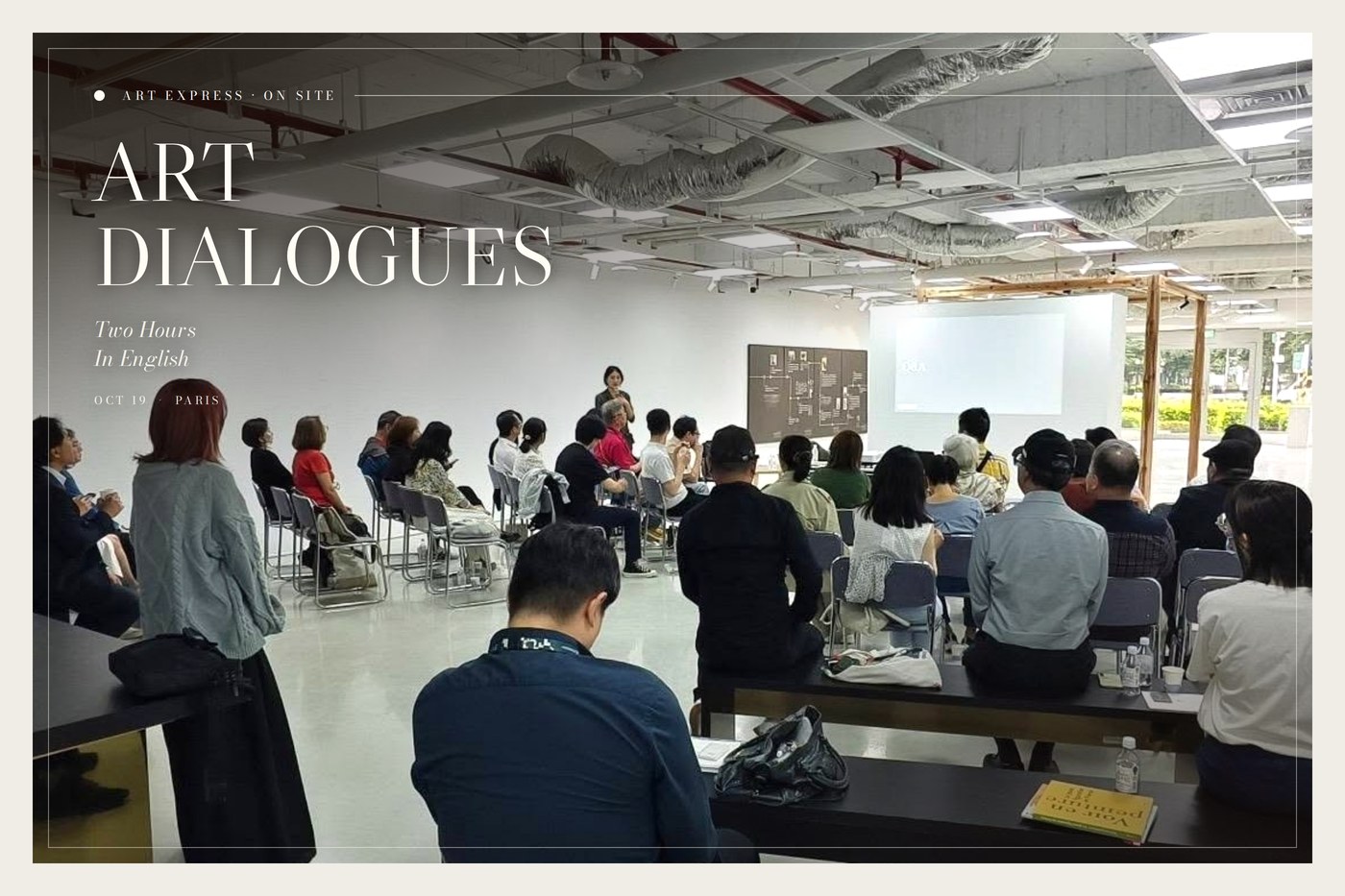
Each October, during Art Basel Paris, the city's museums, foundations and galleries open their annual exhibitions at once, and artists, collectors and professionals arrive from everywhere. Faced with a scene this dense, this conversation asks one question: arriving in Paris from Asia, where do you begin if you want to understand European and international contemporary art?
What you'll take away
- How art enters everyday life in France, and where collecting can begin
- How painting, sculpture, photography, moving image and AI are actually being used now
- The questions the Paris art scene is working through in 2026
- One city from two positions: the cross-cultural translator, and the insider
Outline
Painting, sculpture, photography, moving image, ceramics, textiles, digital art and AI. Contemporary art today takes an extraordinarily wide range of forms. This section selects several representative media, each paired with specific artists and works, and reads them through the Paris and French context to understand how artists are working now.
Painting: France has an exceptionally deep painting tradition. How is a younger generation reworking figurative painting and classical reference? The two advisors take Claire Tabouret as a case, including how Caroline recognised her potential early on, and use it to open questions of artistic judgement and how a market develops.
Sculpture and Material Practices: Contemporary sculpture moved beyond traditional materials some time ago. How have ceramics, textiles, glass and craft-based techniques entered the language of contemporary art?
Photography and Moving Image: In a country with deep cinema and photography cultures, how do artists work with the image? And a more practical question for collectors: how do you actually acquire a moving-image work?
Digital Art and AI: As new technology enters the field, how do new media change what we take a work, an author and a collection to be?
Through actual works, the conversation asks how different media shape the way we look at, understand and collect art.
On the day
Speakers
Her background runs across art practice, art education and art history. She entered the contemporary art industry in 2007, working in Taiwan, Beijing and Shanghai as an exhibition planner, gallery director and collection advisor, later as assistant curator at a private museum in Shanghai. After moving to Paris in 2020 she founded Paris–Taipei Express, built around research, writing, education and advisory work, following the Paris and international art scenes closely. Her advisory practice focuses on helping collectors in Asia understand and enter the European contemporary art ecosystem.
A Paris-based art advisor with nearly thirty years in the field, working across contemporary art, photography and design. She read art history at the Sorbonne, and her career spans galleries, curating, art media and French cultural institutions: gallery director, independent curator, and roles at the Bibliothèque nationale de France, the Villa Médicis in Rome, and Le Journal des Arts. She currently teaches contemporary art and the art market at CY Cergy Paris Université and on arts management programmes. Through City | Art Insider she advises private and corporate collectors, and takes collectors from around the world into the galleries, museums, foundations, fairs and artist studios of Paris.
What makes looking at art in Paris compelling is not only confirming the names you already know, but meeting artists who have not yet reached Asia and who may reopen what you think contemporary art can be. From one work, you come to an artist; from one artist, to a language; and from there, gradually, to what is changing in contemporary art internationally.